Jewish funeral traditions are unique with the fact that burial is most of the time done by hand. After the coffin has been lowered into the grave, mourners are expected to shovel dirt into it, but this is not a requirement in jewish tradition.

On Staten Island A Jewish Cemetery Where All Are Equals In Death - The New York Times
Its meaning is both religous and cultural and subject to several interpretations.

Jewish burial customs shoveling dirt. The shovel cannot be passed hand to hand, but should be placed into the dirt and then retrieved by the next mourner. Upon the conclusion of the burial service the mourners and attendees at the cemetery help to place earth (dirt) into the grave on top of and around the casket either with the front of back side of a shovel. According to the torah, a jewish funeral should occur within 24 hours of the death as a sign of respect for the deceased.
The coffin is entered in a laying position (it is an untrue myth that jews are buried upright). Hebrew, jewish mourning custom of tearing one’s garment. Children, parents, siblings, and spouse come forward, taking turns dropping a little of the soil onto the coffin.
Once the coffin is lowered into the grave, family and close friends cover the coffin with a few handfuls of dirt. The second time, you turn the shovel right side up, to indicate acceptance,” the rabbi explained. [tearing] is made on the left side of the garment for parents (over the heart) and on the right side for other relatives.
Jewish customs are rich and involved with every aspect of life. It is considered a great act of kindness to shovel dirt onto the grave, though members do not pass the shovel but lay it down and have it taken up by the next person. The rabbi then hands one of the principal mourners a trowel or simply gestures for him or her to pick up the shovel placed beside or in a pile of newly dug earth.
It’s customary in the jewish tradition, but not required, for the mourners to shovel dirt into the grave after the casket has been lowered. Once something has been done three times, it gains a measure of permanence, regularity and substance. The jewish customs surrounding death, burial and mourning are intended to provide both respect for the departed and comfort for the mourners.
In orthodox jews burial traditions, it is customary that attendees should help with covering with a shovel. It is usually held during the week following the funeral and burial. Covering the casket with earth (dirt):
Many jewish traditions allow the mourning to use the shovel's back as a symbol of grief and reticence. Jewish death rituals invite attendees to participate in the burial. You do the first one with the shovel upside down to signify reluctance.
You may choose to have a tie, blouse or shirt, or suit lapel torn, or a black ribbon worn on a garment. However, there are exceptions to this timeframe. The rabbi then repeats psalm 91 and el maleh rachamim.
Maybe a few, if any, family members shoveling dirt using separate shovels brought from home. Once the body is lowered, it’s traditional for the justification of the divine decree, or tzidduk hadin, to be read. Graveside services tend to be short, with prayers or readings and possibly a eulogy before the body is lowered into the ground, as a general rule.
My guess is that this is because 3 is seen as a significant amount in torah law. During a jewish burial, family and friends watch as the casket is lowered into the ground. At some funerals an urn with sand is prepared and everyone drops three scoops into the grave, while in more traditional circles everyone uses a shovel and real dirt.
This may be done by hand or with a shovel. No large gatherings or services followed by a. Kriyah/tearing is often done at the funeral as explained later in this guide and the custom is to tear a black ribbon.
Some take grass from the ground and throw it behind them. As the rabbi and a few of the assembled finally took shovels in hand and began filling in the grave with earth, someone among the crowd murmured how “barbaric” it seemed to do this dirty work in public and by hand. Cultural etiquette is shown by always pointing the shovel down and replacing it into the dirt when you are done.
There are less common customs for each person to place five or thirteen spadefuls. Some throw coins to satisfy the evil spirits, so they will not lay claim on the deceased. Typically, it takes place in a synagogue, funeral home, or graveside.
Then, everyone places handfuls (or shovelfuls) of dirt on top of the casket, starting with the immediate family members first. Jewish law forbids cremation and it is important that the body decomposes naturally in the ground. Families mourning their loved ones on screens.
One such custom that may seem startling or even harsh at first glance is the involvement of the mourners in the actual process of burying the deceased. Originally the tearing was a spontaneous and emotionally intense tearing of one’s clothes soon after the death. 3 shovels of dirt in my experience it is indeed common that each of the participants shovel at least three spades full of dirt.
They must use the convex side of the shovel. “it is jewish custom for everyone at the graveside,” the rabbi explained, “to put two shovels of dirt on the coffin. This custom originates in the bible.
A more modern jewish tradition includes pouring three scoops of sand into the grave out of a burial urn. This is done by filling the grave with three shovels of dirt. The jewish burial ceremony has many customs one of which includes the placement of earth on top of the casket after it is lowered into the grave.
At a jewish funeral, or levayah, it is customary for dirt to be thrown upon the body or casket of the deceased. A jewish memorial service is a funeral for a jewish person that follows specific religious practices. Jewish mourners should gather to render burial a communal event in order to ease their grief and receive support.

114 Gravedigger Photos - Free Royalty-free Stock Photos From Dreamstime

A Shovel Per Mourner Toi Sees Traditions Remade At Survivors Maryland Funeral The Times Of Israel
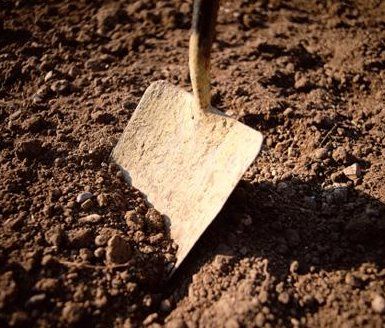
Ritual And Ceremony The Co-op Funeral Home Of Peoples Memorial
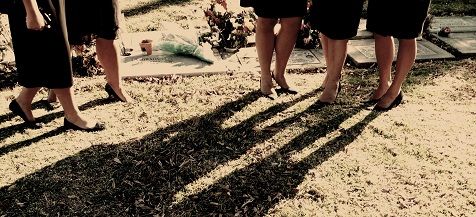
Ritual And Ceremony The Co-op Funeral Home Of Peoples Memorial

Book Burial Brings A Rare Custom Of Judaism To Naples Jewish Congregation
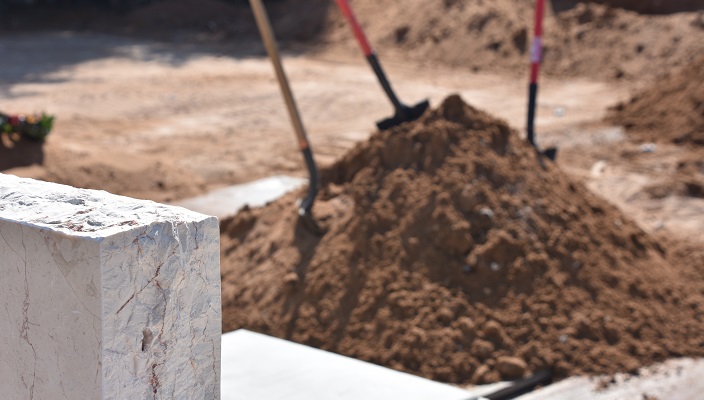
Why You Should Have A Funeral Reform Judaism
Jewish Funeral Traditions 15 Important Things You Need To Know

Jewish Funerals What To Expect When You Go My Jewish Learning

Holocaust Museum Human Remains From Nazi Death Camp Buried In Monsey

Oklahoma Jewish Community Honors Unnamed Holocaust Victim With Proper Burial

What Is The Symbolism Of Throwing Dirt On A Coffin

Mysterious Holocaust Survivors Skull Given Jewish Burial In California - Who Was The Man With The Numbers On His Arm - Chabad-lubavitch News
The Life Cycle Of Torah - Jewish Study Network


Jewish Funeral Customs - Renaissance Funeral Home

My Uncles Heartbreaking Burial During Coronavirus Saying Goodbye From 6 Feet Away - Njcom
Members Of The Jewish Community And Other Mourners Shovel Dirt Over News Photo - Getty Images

Why Do Jews Shovel Dirt On The Casket At A Burial


Shoveling Dirt On Ritual And Grief At A Jewish Funeral Pangyrus
Why Do Jews Shovel Dirt On The Casket At A Burial
